Tuesday, 20 October 2026

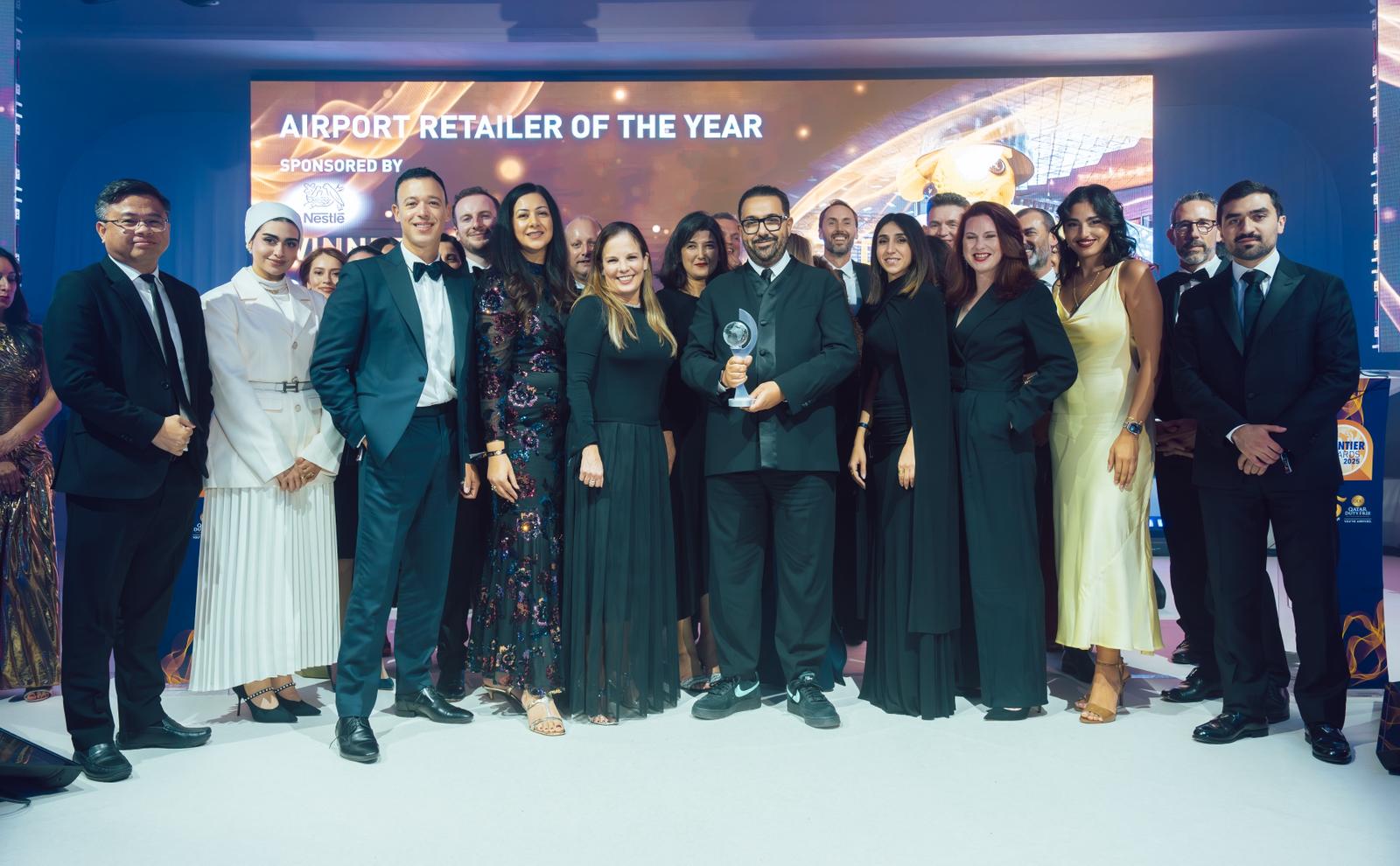
Qatar Duty Free Wins Triple Crown at Frontier Awards 2025 in Cannes

Published: Friday, October 03, 2025
Qatar Duty Free Wins Triple Crown at Frontier Awards 2025 in Cannes

Qatar Duty Free (QDF) has cemented its place as a global leader in airport retail by being crowned Best Airport Retailer of the Year at the Frontier Awards 2025 in Cannes, France — for the third consecutive year. The prestigious accolades, often dubbed the "Oscars of the travel retail industry," are widely regarded as benchmark honors, recognizing innovation, customer engagement, and world-class retail concepts.

In addition to this top recognition, QDF also earned two further titles: Best Specialty Concept (Hybrid F&B) for its culturally rich Souq Al Matar and Retail Activation of the Year for the dynamic Live the Formula 1 Life campaign.

A Three-Time Champion in a Changing Industry

Winning three years in a row is a rare achievement in the duty-free sector, where global hubs such as Changi Airport, Heathrow, and Dubai Duty Free regularly contend for the spotlight. The recognition reflects not only QDF’s consistency but also its ability to adapt to shifting consumer habits, technological advancements, and heightened competition from large-scale retail partners.
Industry sources such as the Moodie Davitt Report highlight that the post-pandemic recovery of global travel retail has seen passenger spending rebound sharply — with Middle Eastern airports positioned as growth leaders due to high levels of investment in facilities, technology, and customer experience. QDF’s continued wins underscore Hamad International Airport’s reputation as an experiential destination, not simply a transit hub.

The Souq Al Matar: Heritage Meets Luxury

The award-winning Souq Al Matar has become more than a retail space; it’s a blend of cultural storytelling and boutique shopping. The space replicates an authentic Qatari marketplace, with stalls offering locally made crafts, artisanal food products, dates, spices, and souvenirs. At the same time, it integrates modern hybrid food and beverage options, creating a space where heritage and hospitality converge.

Judges at the Frontier Awards praised Souq Al Matar for being a “model for sense-of-place retailing”, demonstrating how airports can give international travelers an authentic encounter with local traditions.

Formula 1 Inside an Airport

QDF’s Live the Formula 1 Life campaign, meanwhile, represented one of the most extensive themed activations ever staged in an airport. Tied to Qatar’s growing presence on the international motorsport stage, the campaign turned Hamad International into a Formula 1-inspired environment with interactive race simulators, cars on display, branded merchandise, and photo zones designed to engage families and sports enthusiasts alike.

The campaign tapped into Qatar’s major sponsorships and global sporting partnerships, which include hosting the Qatar Grand Prix, FIFA tournaments, and partnerships with top European football clubs. Retail analysts described the activation as a bold blueprint for how airports can merge entertainment, sport, and brand storytelling with commerce, increasing both brand equity and passenger traffic in stores.

Voices From Leadership

Qatar Airways Group Chief Executive Officer Eng. Badr Mohammed Al Meer credited the achievement to QDF’s strategic vision and people-first approach:

"These awards are a testament to our philosophy of continuous innovation. Through elevating airport retail into an immersive, engaging journey, Hamad International Airport is today not only a hub for connectivity, but a global retail and dining hotspot attracting millions of travelers annually."

Thabet Musleh, Senior Vice President of QDF, emphasized the human element: “Our teams are at the heart of these achievements. Their creativity and relentless drive to redefine what airport retail can deliver are the real reasons behind our continued global success.”

A Global Powerhouse in Airport Retail

Currently, QDF manages more than 200 retail and dining outlets, ranging from world-renowned luxury brands such as Louis Vuitton, Burberry, Gucci, Rolex, and Hermès to everyday essentials and convenience concepts. The operator has also pioneered exclusive partnerships, introducing first-ever airport boutiques for brands like Harrods Tea Room, Ralph Lauren, and KidZania at HIA.

Hamad International Airport — itself awarded World’s Best Airport 2025 by Skytrax — handled over 46 million passengers in 2024, a number projected to rise significantly due to Qatar Airways’ expanding network and Doha’s positioning as a global travel hub. This provides QDF with a captive audience primed for both high-end luxury shopping and culturally immersive purchasing experiences.

Regional Rivalries and Future of Duty-Free

The GCC region remains one of the fiercest arenas in travel retail. Dubai Duty Free, one of the largest single-airport retailers in the world, reported annual sales exceeding USD 2 billion in 2024, while Qatar Duty Free is fast building market share through its emphasis on personalization, experiential retailing, and cultural representation. Singapore’s Changi Airport is another top competitor, often celebrated for its integration of entertainment spaces like the Jewel complex.

What sets QDF apart is its hybrid strategy: combining luxury retail dominance with destination-specific experiences like Souq Al Matar. This dual focus caters to both high-spending luxury travelers and passengers seeking authentic local connections, boosting both revenue streams and brand loyalty.

According to analysts, as the global duty-free sector is projected to surpass USD 120 billion by 2030, QDF’s investment in technology, personalization, and experiential concepts will be key to maintaining an edge. Innovations such as contactless shopping, AI-powered retail analytics, and curated omnichannel experiences are areas the operator is already exploring.

Malaysia Airlines Parent Weighs Green Tax as Sustainable Fuel Costs Rise

Published: Tuesday, October 20, 2026
Malaysia Airlines Parent Weighs Green Tax as Sustainable Fuel Costs Rise

Malaysia Aviation Group, the parent company of Malaysia Airlines, is considering whether to introduce a green tax on passengers to help cover the rising cost of sustainable aviation fuel (SAF), potentially adding to airfares.

Group chief Capt. Nasaruddin A. Bakar said Monday that the company was examining different options as airlines worldwide seek to reduce carbon emissions while facing high SAF prices and limited supplies.

“We are looking at all options,” Nasaruddin told The Associated Press on the sidelines of an aviation sustainability conference. He stressed that both passengers and airlines needed to be able to afford the transition to cleaner fuel.

Singapore, Malaysia’s neighbour, has already announced a government-mandated green aviation levy set to take effect in January 2027. Charges will vary according to destination and cabin class, making Singapore the first country to announce such a measure.

The aviation sector faces growing pressure to address its environmental impact as global air travel demand increases. The International Energy Agency estimates that aviation accounts for about 2.5% of annual global carbon emissions, while the UN-backed International Civil Aviation Organization has established a goal of achieving net-zero carbon emissions by 2050.

According to the aviation organisation, sustainable aviation fuel could reduce the industry's emissions by around 65%.

SAF is typically made from renewable materials, including used cooking oil, waste fats and agricultural residues. It can be blended with conventional jet fuel and used in existing aircraft without requiring changes to their engines.

However, its widespread adoption remains constrained by higher production costs, limited manufacturing capacity and restricted access to sustainable raw materials.

The International Air Transport Association estimates that SAF currently represents less than 1% of global jet fuel consumption, highlighting the scale of the challenge facing airlines as they work towards their emissions targets.

Source: Associated Press

SalamAir Signs Distribution Deal with Amadeus to Expand Global Reach

Published: Tuesday, October 20, 2026
SalamAir Signs Distribution Deal with Amadeus to Expand Global Reach

SalamAir has entered into a distribution agreement with travel technology company Amadeus as the Omani low-cost airline steps up efforts to expand its international presence and reach new customer segments.

Under the agreement, travel sellers connected to the Amadeus Travel Platform will gain access to SalamAir's fares and services, allowing the airline to expand its distribution network and improve the availability of its products across global markets.

Steven Allen, chief commercial officer of SalamAir, said the partnership would support the airline's growth ambitions by strengthening its international market presence and making its services more accessible to travellers seeking affordable air travel.

The agreement forms part of SalamAir's broader strategy to diversify its sales channels, increase its global visibility and respond to rising travel demand across its expanding network.

Maher Koubaa, executive vice-president of the Travel Unit and managing director for Europe, the Middle East and Africa at Amadeus, said the partnership reflected the company's commitment to supporting the low-cost airline sector. He added that Amadeus' technology solutions were designed to help low-cost carriers expand and compete in international markets.

Source: Oman Daily Observer

Emirates Adds 14 Dubai-Durban Flights for Festive Season Demand

Published: Tuesday, October 20, 2026
Emirates Adds 14 Dubai-Durban Flights for Festive Season Demand

Emirates is expanding its Dubai-Durban schedule with 14 additional flights during the 2026-27 festive season, offering travellers more options during one of the busiest periods of the year.

The additional services will operate as a second daily flight between December 17 and 23, 2026, and January 2 and 8, 2027. The airline will deploy a three-class Boeing 777 on the route.

Flight EK2535 will depart Dubai at 04:00 and arrive in Durban at 10:30. The return service, EK2536, will leave Durban at 12:15 and land in Dubai at 22:30.

Emirates' existing daily flights, EK775 and EK776, will continue to operate according to their regular schedules.

The airline is also providing flexible booking options to help passengers manage changes to their travel plans. Customers booking flights to Dubai can change their travel dates an unlimited number of times without fees across all cabin classes. For tickets to other destinations, passengers are entitled to one complimentary date change.

Emirates' Hold My Fare service allows customers to reserve a ticket price for 24 hours at no additional cost. The airline has also reduced its refund fees.

Source: TradeArabia

Lufthansa Orders Extra Fuel on Frankfurt Flights Amid Supply Concerns

Published: Monday, October 19, 2026
Lufthansa Orders Extra Fuel on Frankfurt Flights Amid Supply Concerns

Lufthansa has increased fuel loading on flights bound for Frankfurt Airport as a precautionary measure amid tighter jet fuel supplies caused by reduced pipeline capacity.

The airline said on Thursday that the move was intended to manage potential supply constraints at Germany’s largest aviation hub. Airport operator Fraport confirmed that routine maintenance was under way on a pipeline supplying jet fuel to the airport.

Fraport said the maintenance had been factored into its operational planning and was not expected to cause a fuel supply bottleneck. Alternative supply routes and sufficient storage capacity were helping to mitigate potential disruption.

“The airport's operational capability is therefore not affected,” Fraport said.

Lufthansa said it was not currently anticipating any flight cancellations as a result of the situation.

German newspaper Bild first reported the additional fuelling measures, citing internal instructions reportedly issued to Lufthansa pilots on selected routes. The practice, known as “tankering”, involves carrying more fuel than required for a flight so that an aircraft needs less or no refuelling at its destination.

According to Bild, the additional fuel carried by Airbus A320-family aircraft is limited to eight tonnes to ensure the planes can still be towed on the ground. The measures primarily affect short-haul services, although some long-haul flights are increasingly being included.

The precautionary steps are intended to give Lufthansa greater flexibility in managing its fuel requirements while pipeline maintenance continues at Frankfurt Airport.

Source: Reuters

Turkish Airlines, CFM Sign MoU Covering Over 600 LEAP-1B Engines

Published: Monday, October 19, 2026
Turkish Airlines, CFM Sign MoU Covering Over 600 LEAP-1B Engines

Turkish Airlines has signed a strategic agreement with CFM International to strengthen engine maintenance capabilities and support the expansion of its Boeing 737 MAX fleet.

The long-term services agreement will cover the airline group's entire LEAP-1B engine fleet, including engines already ordered and delivered, spare engines, units installed on leased aircraft and potential future options. The combined total exceeds 600 engines operated by Turkish Airlines and its subsidiary, AJet.

The memorandum of understanding (MoU) was signed during a ceremony in Istanbul by Turkish Airlines Chairman of the Board and the Executive Committee, Prof. Murat Şeker; Turkish Technic CEO and Board Member, Mikail Akbulut; and Safran CEO Olivier Andriès. Safran is one of the two parent companies of CFM International.

The agreement also includes a material services arrangement to support the development of an engine maintenance, repair and overhaul (MRO) facility in Türkiye.

Şeker said the partnership would help Turkish Airlines accommodate fleet and network growth while improving operational efficiency. He added that the expanded services agreement would provide the technical expertise and long-term support required to develop LEAP engine maintenance capabilities.

Akbulut said the agreement would enable Turkish Technic to undertake comprehensive LEAP engine maintenance. He also reaffirmed the company's commitment to investing in engine services alongside its existing aircraft and component maintenance operations.

Andriès described the MoU as another milestone in a relationship with Turkish Airlines that has lasted nearly four decades. He said the agreement reflected both companies' ambitions to support the airline's growth and fleet expansion, while promoting an open MRO ecosystem offering flexible, competitive services to improve operational performance and control costs.

GE Aerospace Chairman and CEO H. Lawrence Culp Jr. also welcomed the agreement, highlighting Turkish Airlines' extensive international network and its confidence in CFM engines. He said the partnership would build on the companies' established relationship as the airline expands its Istanbul operations and engine maintenance capabilities.

Turkish Airlines currently operates 96 Boeing 737 Next Generation aircraft powered by CFM56-7B engines and 79 Boeing 737 MAX aircraft equipped with LEAP-1B engines.

CFM said it had delivered more than 10,000 LEAP engines during the 10 years since the engine entered service, with the fleet accumulating over 100 million flight hours. The manufacturer continues to introduce upgrades, including a high-pressure turbine durability kit designed to extend time on wing and a reverse bleed system (RBS).

The agreement is expected to strengthen Turkish Airlines' long-standing relationship with CFM International and support the integration of newly ordered Boeing 737 MAX aircraft into its expanding fleet. The planned engine MRO facility will also enhance Turkish Technic's ability to provide comprehensive maintenance services.

Source: Turkish Airlines