Tuesday, 20 October 2026

Qatar Welcomes 3.5 Million Visitors in First Nine Months of 2025

Published: Saturday, October 25, 2025
Qatar Welcomes 3.5 Million Visitors in First Nine Months of 2025
Top Stories

Qatar welcomed 3.5 million visitors between January and September 2025, representing a 2.2% rise compared to the same period last year, according to new data released by Qatar Tourism.

In a statement on Thursday, the tourism authority said that both visitor arrivals and accommodation demand maintained steady growth through the end of the third quarter, as the country gears up for a busy schedule of international events in the final months of 2025 and early 2026.
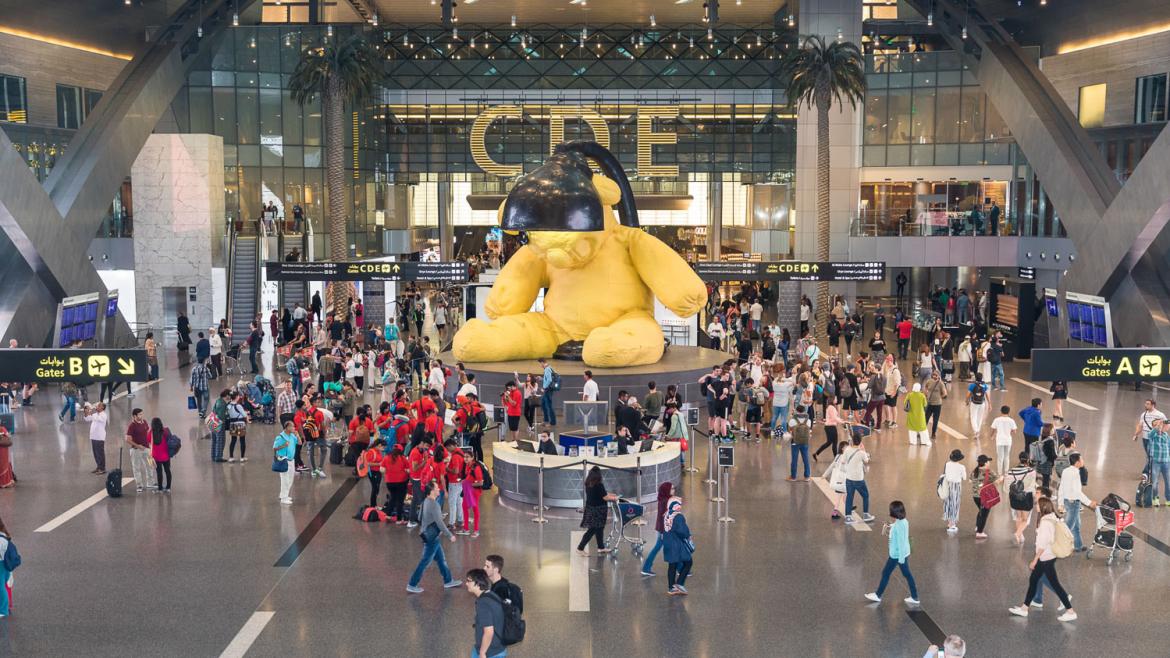
The report highlighted that Gulf Cooperation Council (GCC) countries continued to be Qatar’s largest source of tourists, accounting for 36% of all arrivals. Europe contributed 25% of total visitors, while Asia and Oceania made up 22%. Notably, arrivals from China increased by 37% and from Australia by 31% in the third quarter alone.

Air travel remained the most common entry point, with 60% of visitors arriving by air, 33% entering by land, and 7% by sea — a sign of Qatar’s growing accessibility across multiple travel channels.

The hospitality sector also performed strongly. The total number of hotel and serviced apartment rooms reached 41,733, while the average occupancy rate rose to 68%, an increase of 2.4 percentage points compared with last year. Room nights sold climbed to 7.7 million, reflecting an 8% year-on-year growth in demand.

Looking ahead, Visit Qatar plans to launch an extensive lineup of events under the Qatar Calendar 2025–2026, featuring major sports tournaments, cultural festivals, and entertainment programs designed to attract both local and international audiences.

Among the key upcoming events are the Doha International Military Music Festival (Doha Tattoo), the T100 Triathlon World Championship Final in Lusail, and the Formula 1 Qatar Grand Prix at the Lusail International Circuit. The Doha Film Festival, organized by the Doha Film Institute, will also return as part of the season’s cultural highlights.

Additionally, Visit Qatar is coordinating with the Local Organizing Committee for Football Events to prepare for a series of global football tournaments, including the FIFA Arab Cup Qatar 2025, FIFA U-17 World Cup Qatar 2025, and FIFA Intercontinental Cup 2025. These competitions will take place in Doha, Lusail, and Al Rayyan, supported by comprehensive plans for stadium operations, fan engagement, accommodation, and media services.

Qatar Tourism emphasized that the steady growth in visitor numbers aligns with the goals of the Third National Development Strategy (2024–2030), which seeks to diversify the national economy and expand cultural, sports, and leisure opportunities for both residents and tourists.

The winter tourism season will extend into 2026, offering a rich cultural program that includes the second editions of Sealine Season 2026 and Brouq Events in Ras Abrouq, along with Art Basel Qatar at the National Museum of Qatar. Food lovers can look forward to the Qatar International Food Festival and the Throwback Food Festival, complemented by ongoing heritage and family activities across Katara Cultural Village, Souq Waqif, and Al Bidda Park.

Pakistan Keeps Airspace Closed to Indian Airlines Through April 24

Published: Thursday, March 19, 2026
Pakistan Keeps Airspace Closed to Indian Airlines Through April 24
Top Stories

India and Pakistan have maintained mutual restrictions on each other’s airspace since April 2025, a situation that continues to affect commercial aviation across the region. While international airlines are still permitted to use the airspace of both countries, carriers from India and Pakistan remain barred from crossing into each other’s territory.

The Pakistan Airports Authority (PAA) confirmed on Wednesday that its airspace will remain closed to all Indian-registered aircraft, including those operated, owned, or leased by Indian airlines, as well as military flights, until early April 24. The restriction was first imposed on April 24, 2025, following Indian missile strikes linked to Operation Sindhoor.

Subsequently, Pakistan extended the closure to international traffic on May 7, 2025, before reopening its skies a day later for non-Indian airlines. Since then, both nations have continued issuing monthly Notices to Airmen (NOTAMs) to reaffirm the ongoing restrictions.

The impact of these measures has been uneven. Indian carriers, particularly those operating from northern hubs such as New Delhi, have been forced to reroute flights to avoid Pakistani airspace. These detours have significantly increased operational costs and flight durations.

The situation has been further complicated by regional instability, including conflict in Iran, which has pushed Indian airlines to adopt longer routes over Africa for Europe-bound flights. In many cases, this has extended travel times by up to two hours.

Long-haul services have also been affected. For example, flights from New Delhi to New York operated by Air India now often include a stopover in Europe, stretching total journey times to approximately 22 hours. By comparison, US-based carriers that can traverse Pakistani airspace complete similar routes in around 16 hours.

Air India has estimated that the restrictions are costing the airline roughly $600 million annually. A company representative recently noted at an international aviation forum in Mumbai that competitors have increasingly captured market share as a result of these operational challenges.

Passenger trends reflect this shift. While international airlines operating direct services between Bengaluru and London have reported growing demand, Air India has not experienced a similar increase, largely due to the longer and less efficient routes it must operate.

Source: Khaleej Times

UK Sends Four More Typhoon Jets to Qatar to Boost Regional Defense

Published: Thursday, March 05, 2026
UK Sends Four More Typhoon Jets to Qatar to Boost Regional Defense
Top Stories

In a move to bolster regional security, the United Kingdom has confirmed the deployment of four additional Typhoon jets from the Royal Air Force to Qatar. This strategic reinforcement is part of ongoing efforts to support defensive operations in the region, further solidifying the UK’s commitment to regional stability.

The newly dispatched jets will supplement the existing aircraft stationed at the UK-Qatar Joint Typhoon Squadron. These jets were first deployed in January to enhance security measures, protect British nationals, and safeguard the country's interests in the region.

This latest deployment signals the UK's unwavering support for its allies and its determination to take all necessary steps to ensure the protection of its citizens and national assets. The UK government has reiterated that it will continue to work closely with international partners to maintain peace and security in the region.

Iranian Foreign Minister Contacts Qatar’s Prime Minister as Tensions Escalate

Published: Thursday, March 05, 2026
Iranian Foreign Minister Contacts Qatar’s Prime Minister as Tensions Escalate
Top Stories

Sheikh Mohammed bin Abdulrahman bin Jassim Al-Thani, Prime Minister and Minister of Foreign Affairs of Qatar, has firmly rejected Iranian claims regarding recent missile strikes, asserting that the attacks were directed at civilian and residential areas within Qatar, contradicting Iran's explanation that they were aimed at American interests.

During a phone call with Dr. Abbas Araghchi, Iran's Minister of Foreign Affairs, Sheikh Mohammed emphasized that the missile strikes, which impacted areas such as the vicinity of Hamad International Airport and key industrial zones, including facilities linked to liquefied natural gas production, violated Qatar’s sovereignty. He stressed that the evidence on the ground clearly disproved Iran’s assertions.

The Prime Minister described the missile attacks as a "flagrant violation" of both Qatar's sovereignty and international law. He further pointed out that these strikes were part of a broader escalation involving drones and aircraft, with the latter being intercepted by Qatar's armed forces as they entered the country’s airspace.

Sheikh Mohammed also condemned Iran's approach as "escalatory" and accused Tehran of attempting to draw neighboring countries into a conflict that does not concern them. He called for an immediate cessation of attacks on states that have sought to remain neutral, urging all parties to focus on the broader interests of regional peace and stability.

While reaffirming Qatar's commitment to dialogue and diplomacy, Sheikh Mohammed made it clear that the country would take necessary measures to protect its sovereignty and security. He pointed to Qatar’s right to self-defense under Article 51 of the UN Charter, stressing that such acts of aggression would not go unanswered.

Over 3,400 Flights Canceled Across Middle East Due to Airspace Closures

Published: Monday, March 02, 2026
Over 3,400 Flights Canceled Across Middle East Due to Airspace Closures
Top Stories

A significant disruption to air travel occurred on Sunday, as over 3,400 flights were canceled across seven major airports in the Middle East. According to flight tracker Flightradar24, the cancellations affected key transportation hubs in Qatar, the United Arab Emirates (UAE), and Bahrain, which experienced widespread airspace closures due to escalating regional tensions.

Airports including Hamad International Airport in Doha, Dubai International Airport, and Bahrain International Airport saw massive operational shutdowns, halting both domestic and international flights. The closures are linked to the ongoing geopolitical developments and airspace restrictions in the region.

This large-scale disruption has left thousands of passengers stranded, with many facing delays and extended waiting times as airlines and authorities work to manage the situation. Travelers are urged to check with airlines for updates on flight statuses, as the closures continue to impact flight schedules.

As the situation evolves, aviation authorities in the affected countries are monitoring the situation closely and providing updates as new information becomes available. Passengers are advised to stay informed through airline websites or customer service hotlines.

This comes as part of ongoing regional developments, which have led to airspace restrictions across several Middle Eastern countries.

Saudi Arabia Intercepts Iranian Missiles Targeting Riyadh Airport and Military Base

Published: Sunday, March 01, 2026
Saudi Arabia Intercepts Iranian Missiles Targeting Riyadh Airport and Military Base
Top Stories

Saudi air defense systems successfully intercepted Iranian missile strikes targeting both Riyadh’s international airport and the Prince Sultan Airbase, which is home to U.S. military personnel.

An unnamed source informed AFP that the missiles were intercepted on Sunday afternoon. "Saudi air defenses effectively neutralized the Iranian missiles near Riyadh airport and the Prince Sultan Airbase," the source stated, requesting anonymity due to the sensitive nature of the information.

Fortunately, the attack caused no disruption to air traffic and did not result in any casualties or damage. An observer near the airport reported witnessing and hearing the air defense intercept the missiles mid-air, highlighting the capability of the defense systems in place.

This missile interception comes amid a series of similar attacks across the Gulf, with airports in Dubai, Abu Dhabi, Kuwait, and Manama also targeted. Abu Dhabi authorities confirmed that one person died in the incident at their airport.

Saudi Arabia, which hosts U.S. military personnel and bases, remains a key ally in the region, although larger U.S. military installations are found in Bahrain and Qatar. The interception serves as a reminder of the growing security risks in the region, with rising tensions between Iran and its neighboring countries. Authorities are closely monitoring developments as the situation evolves.