


.jpg)
Hundreds of thousands of travelers were left stranded across the Middle East on Sunday after coordinated U.S. and Israeli attacks on Iran triggered widespread airspace closures and airport shutdowns, paralyzing one of the world’s busiest aviation corridors.
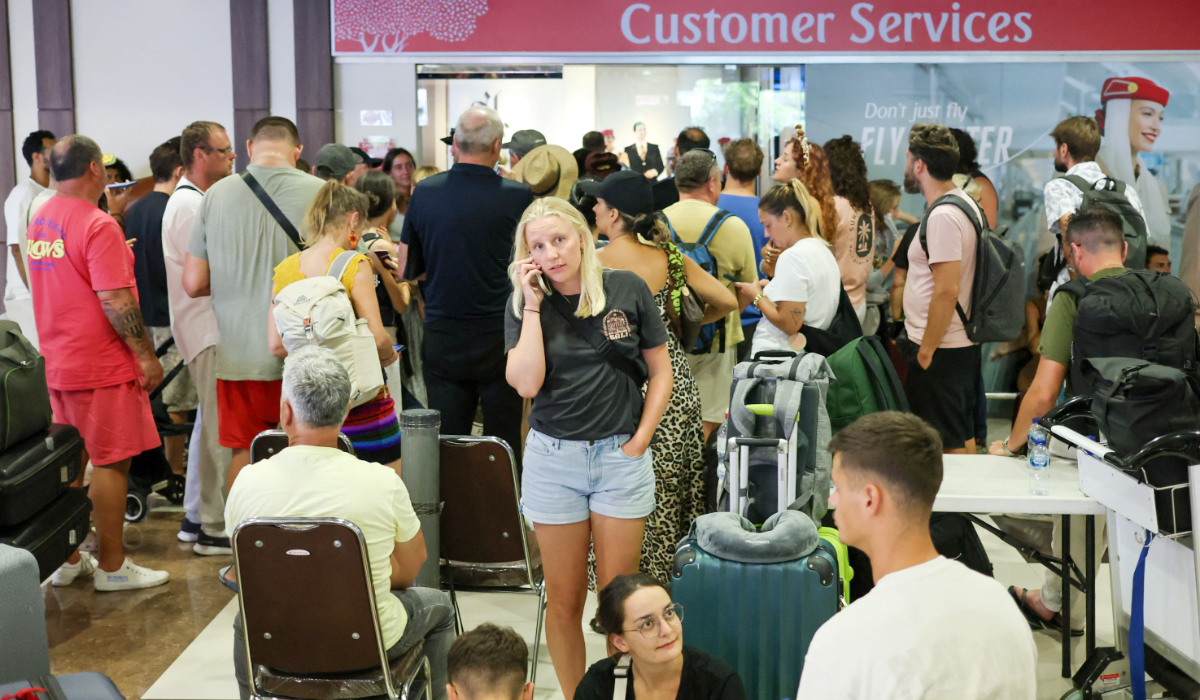
Tourists and business passengers crowded hotels and terminals, scrambling to rebook flights or reach airlines through overwhelmed call centers. With little clarity on when airspace would reopen, several governments advised their citizens to shelter in place.
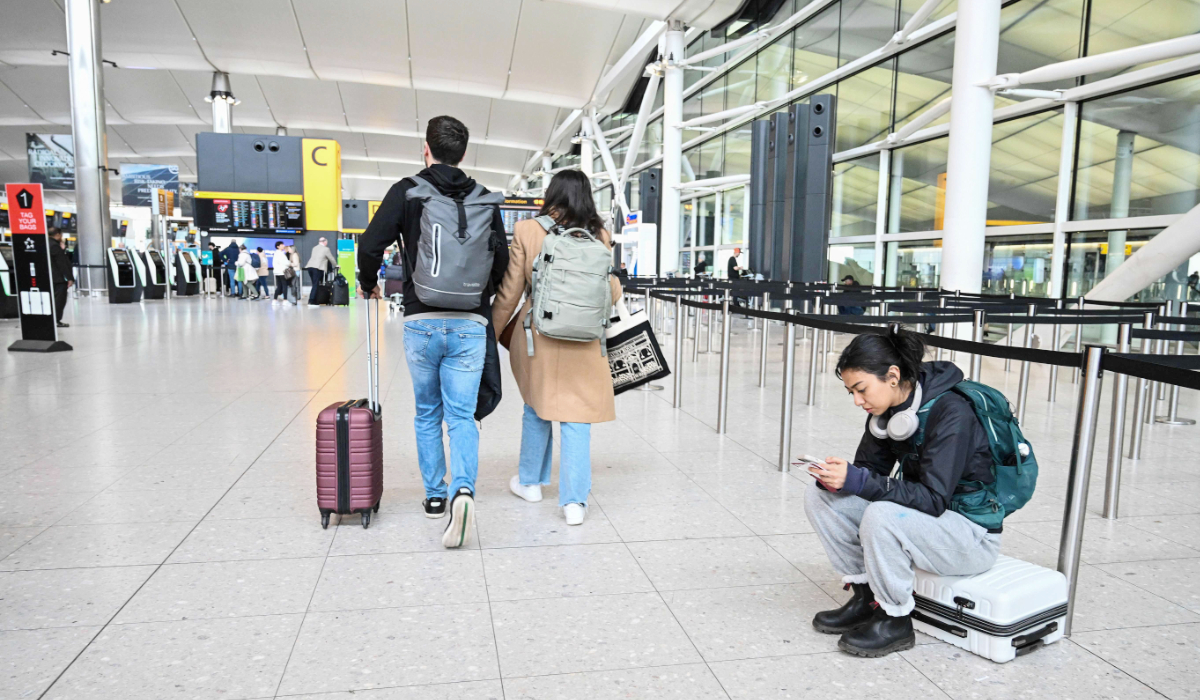
Major regional hubs — including Dubai International Airport, Abu Dhabi’s Zayed International Airport and Hamad International Airport in Doha — suspended operations following reported strikes. Dubai International, among the busiest airports globally and a key transit point between Europe, Africa and Asia, was among those affected.
In Dhaka, Bangladesh, prospective migrant worker Mohammad Abdul Mannan waited anxiously at Hazrat Shahjalal International Airport, determined to depart for the Gulf despite the escalating conflict.
“We have set out to go for work, and we must go,” he said. “My only concern is how to go abroad and how to earn an income.”
In Dubai, witnesses reported hearing fighter jets overhead and explosions, including a missile strike that hit the Fairmont Palm Hotel. Emirates Airline suspended all flights to and from Dubai until at least Monday afternoon, leaving thousands seeking alternative arrangements.
Louise Herrle and her husband, returning to Pittsburgh after touring Dubai and Abu Dhabi, saw their Washington-bound flight canceled with no immediate option to reschedule.
“We’re in the hotel room, we are not leaving it,” Herrle said. “You’re not going to give it up until we know we have a flight out of here.”
Thousands of Flights Canceled
Aviation analytics firm Cirium said the total number of stranded passengers is difficult to determine. However, it estimates that roughly 90,000 travelers transit daily through Dubai, Doha and Abu Dhabi on Emirates, Qatar Airways and Etihad Airways alone.
Airspace closures extended across Israel, Qatar, Syria, Iran, Iraq, Kuwait, Bahrain, Oman and the United Arab Emirates, according to flight-tracking services and government notices. More than 2,800 flights were canceled Sunday across the region, including in Saudi Arabia, Jordan and Egypt, according to FlightAware data. Major international airports — including London, Mumbai, Delhi, Bangkok, Istanbul, Colombo and Paris — also reported dozens of cancellations.
Air India suspended flights to and from the UAE, Saudi Arabia, Israel and Qatar until Tuesday. Israel’s EL AL said it would prioritize repatriating stranded citizens once airspace reopens and halted ticket sales for flights through March 21 to accommodate affected passengers.
UAE authorities confirmed casualties from the strikes. Officials at Dubai International Airport reported four injuries. Abu Dhabi’s Zayed International Airport said one person was killed and seven others injured in a drone strike. Kuwait International Airport also reported strikes. Iran has not publicly claimed responsibility.
Disruptions Expected to Persist
Airlines urged passengers to verify flight status online before traveling to airports. Several carriers offered rebooking waivers or full refunds, though industry analysts warned that disruptions could continue for days.
“For travelers, there’s no way to sugarcoat this,” said Henry Harteveldt, president of Atmosphere Research Group. “You should prepare for delays or cancellations for the next few days as these attacks evolve and hopefully end.”
Former Federal Aviation Administration official Mike McCormick said airspace may gradually reopen once military authorities clarify operational zones and assess ongoing missile threats.
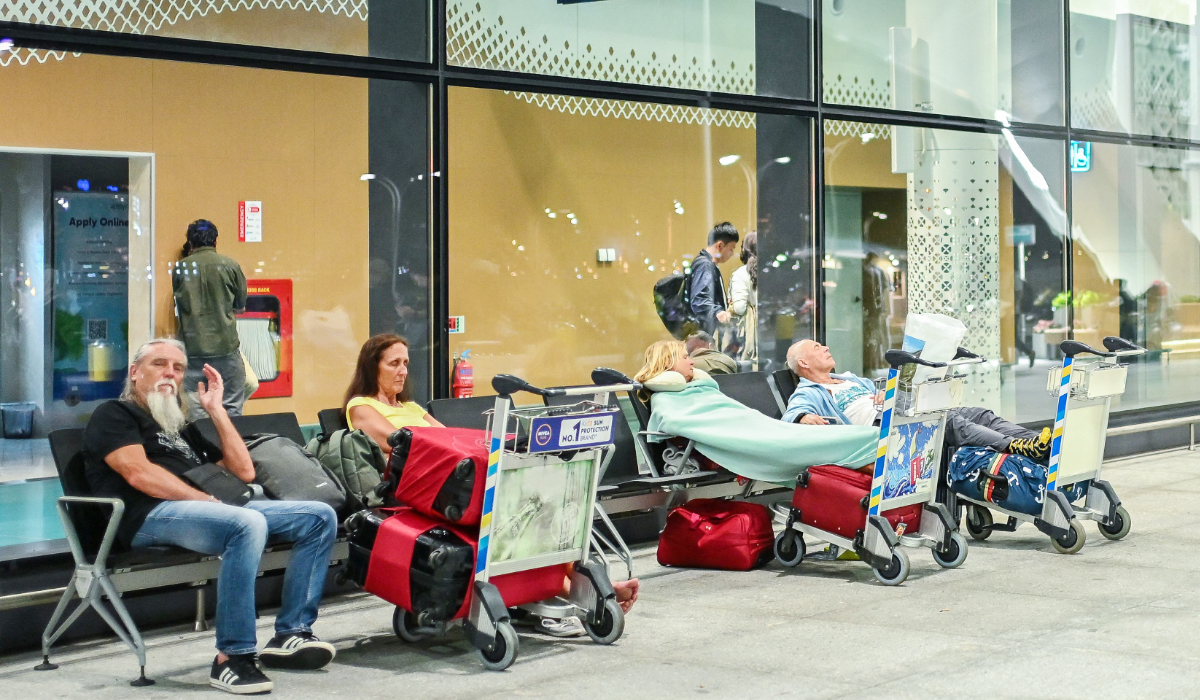
The impact has rippled far beyond the Middle East. In Bali, Indonesia, more than 1,600 tourists were stranded after five Middle East-bound flights were canceled or postponed, airport authorities said.
Airlines operating long-haul routes through the region have begun rerouting flights south over Saudi Arabia, increasing travel times and fuel costs.
Kristy Ellmer, an American business traveler in Dubai, said she has booked multiple flights in anticipation of sudden reopenings while remaining cautious amid continuing explosions.
“You hear a lot of explosions at times — hundreds of them,” Ellmer said. “When we hear them, we don’t stay near the windows just in case the glass breaks.”
With airspace closures still in effect and tensions high, travelers worldwide face continued uncertainty as aviation authorities assess the security situation across the region.

.jpg)
.jpg)

 (1) (1).jpg)

.jpg)
.jpg)


.jpg)
.jpg)


.jpg)


 (1).jpg)
.jpg)
 (2).jpg)
.jpg)
.jpg)
.jpg)
.jpg)
.jpg)
.jpg)
.jpg)
.jpg)
.jpg)


.jpg)

.jpg)
.jpg)
.jpg)

.jpg)
.jpg)
 (1) (1).jpg)
.jpg)


 (1).jpg)

.jpg)

.jpg)
.jpg)
.jpg)